+86-28-83207566
Special Sessions丨特别专题
Special Session 7: AI-Enabled Traffic Control, Organization, and Management (人工智能赋能交通控制、组织与管理)
Recent advances in Artificial Intelligence are reshaping how traffic control, organization, and management are conceived and implemented. This special session aims to provide a dedicated forum for exploring the transformative potential of AI across the control and management of diverse transportation modes. We solicit original contributions that develop and apply AI techniques to address critical challenges in adaptive signal control, dynamic traffic assignment, cooperative driving, real-time incident management, multimodal coordination, and resilient network design. Emphasis is placed on approaches that leverage real-world data, incorporate safety and interpretability constraints, or enable distributed decision-making in complex and uncertain environments. Additionally, this session encourages the integration of AI with emerging concepts such as digital twins, edge computing, and autonomous driving to achieve more efficient and sustainable transportation systems. By highlighting novel methodologies, experimental validations, and deployment insights, this research area will accelerate the transition toward AI-centric intelligent traffic control and management paradigms.
While AI and transportation have become intersecting fields, existing regular conference sessions often address these topics in isolation—focusing either on a specific AI technique without transportation context, or on a specific traffic management problem without considering advanced AI methodologies. This special session is unique because it explicitly targets the synergy between AI and the full spectrum of traffic control, organization, and management, encompassing different transport modes (road, rail, air, shared mobility) as well as decision scales (strategic, tactical, operational). The timing is critical: recent breakthroughs in generative AI, foundation models, and edge intelligence are opening unprecedented opportunities for real-time adaptive control and resilient organization, yet they also pose unique challenges regarding safety, cybersecurity, interpretability, and integration with legacy infrastructure that require concentrated attention. Regular sessions cannot provide the focused, cross-cutting discussion needed to address these challenges holistically. This session will feature invited talks from leading experts and curated contributed papers, creating an environment for deep dialogue on methodological foundations, practical deployment barriers, and future research directions. It will serve as a catalyst for building a community around AI-empowered transportation systems, making it a truly special addition to the conference program.
Related Topics for this Session (but not limited to):
** AI-Powered Traffic Signal Control in Urban Networks
** Mixed Traffic Flow Management in Connected and Automated Vehicle Environments
** Large Language Models and Knowledge Graphs for Maritime Traffic Organization and Decision Support
** Deep Reinforcement Learning for En-Route Air Traffic Control and Conflict Resolution
** AI-Powered Rail Transit Scheduling and Energy Efficiency
** AI-Driven Traffic Flow Forecasting and Anomaly Management
** I-Empowered On-Demand Mobility: Matching, Pricing, and Fleet Management
** Digital Twins and AI for Integrated Transportation Organization and Emergency Response
Submit Method:
1, submit it via the link: http://confsys.iconf.org/submission/ictte2026 (after entering the link, click on the corresponding topic)
2, send your manuscript to ictte2016@vip.163.com with subject "Submit+Special Session-7+Paper Title". (请通过邮件发送稿件,邮件题目:Submit+Special Session-7+Paper Title)
Special Session Chairman:
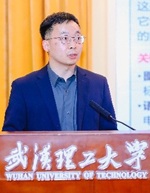
Prof. Yi Liu, Wuhan University of Technology, China
Yi Liu is a professor at the School of Navigation, Wuhan University of Technology. His teaching and research areas include marine traffic management, vessel traffic flow theory, artificial intelligence, and smart maritime technologies. He has led two projects funded by the National Natural Science Foundation of China and two sub-projects under the National Key Research and Development Program, as well as over ten educational and scientific research projects supported by the Hubei Provincial Natural Science Foundation, the Ministry of Education's employment-oriented education initiatives, and industry-university collaboration programs. He has authored more than 30 journal papers in internationally renowned journals in the field. He is also the author of two academic books and textbooks: Theory and Technology of Ship Traffic Flow and Introduction to Maritime Support. His research achievements have been recognized with one provincial and ministerial-level first prize.
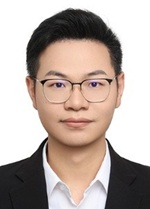
Prof. Maohan Liang, Wuhan University of Technology, China
Maohan Liang is a specially appointed professor at the School of Navigation, Wuhan University of Technology. He was selected for the Overseas Postdoctoral Talent Recruitment Program and recognized as Young Elite Talent of Wuhan University of Technology. His teaching and research areas include artificial intelligence-enabled maritime supervision, intelligent ship-assisted navigation, and maritime safety. He has participated in projects supported by the National Natural Science Foundation of China, the National Key Research and Development Program, and the Singapore Maritime Institute. He has published more than 30 SCI-indexed papers as the first or corresponding author and holds six granted Chinese invention patents. His research achievements have been recognized with the Second Prize of the Science and Technology Progress Award of the China Institute of Navigation, the Second Prize of the Wuhan University of Technology Science and Technology Award, and Best Paper Awards at IEEE CPSCom and ICIA. He has also received the Springer Nature Editorial Contribution Award and Author Service Award.

Dr. Yang Liu, Wuhan University of Technology, China
Yang Liu, a postdoctoral/Assistant Researcher, works in the Intelligent Transportation System Research Center of Wuhan University of technology and the State Key Laboratory of Maritime Technology and Safety. His research focuses on waterway traffic system modeling, traffic situation characterization and traffic big data mining. Participated in a number of related scientific research projects such as the National Natural Science Foundation of China and the national key R&D plan, published more than 10 journal papers in international high-level journals in this field as the first author or corresponding author, and won one second prize of provincial science and Technology Award.