+86-28-83207566

ictte2016@vip.163.com

Home >Keynote Speaker 丨主旨报告人

Invited Speaker丨特邀报告

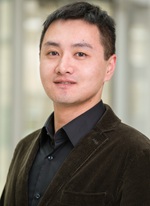
Assoc. Prof. Pengfe SUN, Southwest Jiaotong University

Pengfei Sun is an Associate Professor and Doctoral Supervisor at Southwest Jiaotong University, and a member of the Key Laboratory of Railway Industry of Advanced Energy Traction and Comprehensive Energy Conservation. His main research focuses on automatic train operation and energy conservation of rail transit systems. Over the past five years, he has led and contributed to 7 national projects and 10 enterprise-funded projects. He has published 57 SCI-indexed papers and holds 41 domestic and 2 international invention patents. His research outcomes have been recognized with the First Prize of Sichuan Provincial Science and Technology Progress Award, the First Prize of China Railway Society Science and Technology Progress Award, and the National Railway Youth Science and Technology Innovation Award. Multiple technologies he pioneered have been engineered for practical application and successfully deployed in on-board train equipment.


Speech Topic: From Model-Driven to LLM-Augmented Intelligence: Taking trajectory Optimization as Examples

Abstract: The increasing demands for safety, efficiency, and energy conservation in railway transportation have driven continuous innovation in train operation control. Focusing on train trajectory optimization as a case, this presentation showcases the evolution of the field from model-driven methods to LLM-augmented intelligence, with a focus on the presenter’s research progress. First, model-based train trajectory optimization technologies are introduced, alongside extended research on multi-system and multi-objective optimization in the railway domain. Additionally, engineering application cases of on-board equipment are presented, where the aforementioned technologies have been practically applied. Subsequently, based on an analysis of the limitations of model-based methods, the phased progress of recent LLM-based research efforts is shared. Specifically, a LLM-integrated trajectory optimization approach. A prompt engineering framework is proposed, which integrates domain knowledge with LLM’s reasoning capabilities to generate customizable and executable optimization tools. Experimental results show that this framework achieves an average of 85.9% consistency with numerical simulations while significantly reducing expert dependency.


Assoc. Prof. Tingru ZHANG, Shenzhen University

Tingru Zhang is an associate professor at the Institute of Human Factors and Ergonomics, Shenzhen University, and Guest Researcher at the CGN National Key Laboratory. Her main research focuses on intelligent transportation, human-AI interaction, and smart interaction & user experience. She has led over 10 research projects. With more than 50 publications, her work includes 1 ESI Hot Paper and 1 Highly Cited Paper. She currently serves as an editorial board member for Transportation Research Part F and International Journal of Ergonomics, and has been recognized with honors such as the Top 2% Most-Cited Scientists Worldwide (2023, 2024) and the Outstanding Early Career Award from the International Ergonomics Association (2023).


Speech Topic: EEG-based assessment of driver trust

Abstract: Effective collaboration between automated vehicles (AVs) and human drivers relies on maintaining an appropriate level of trust. However, real-time assessment of human trust remains a significant challenge. While initial efforts have delved into the potential use of physiological signals, such as skin conductance and heart rate, to evaluate trust, limited attention has been given to the feasibility of assessing trust through electroencephalogram (EEG) signals. This study aimed to address this issue by using EEG signals to objectively assess driver trust towards AVs. A total of 420 time- and frequency-domain EEG features were extracted, and nine machine learning algorithms were applied to construct driver trust assessment models. Additionally, to explore the potential of developing cost-effective models with reduced feature inputs, this study developed trust models using features solely from single brain regions: frontal, parietal, occipital, or temporal. The results showed that the best-performing model, utilizing features from the whole brain and employing the Light Gradient Boosting Machine (LightGBM) algorithm, achieved an accuracy of 88.44% and an F1-score of 78.31%. In comparison, models based on single brain regions did not achieve comparable performance to the comprehensive model. However, the frontal and parietal regions showed important potentials for developing costeffective trust assessment models. This study also performed feature analysis on the best-performing model to identify features highly responsive to changes in trust. The results showed that an increased power of beta waves tended to indicate a lower level of trust in AVs. These findings contribute to our understanding of the neural correlates of trust in AVs and hold practical implications for the development of trust-aware AV technologies capable of adapting and responding to driver’s trust levels effectively.


Assoc. Prof. Xueyan Zhou, Xi'an University of Posts & Telecommunication

Zhou Xueyan, an associate professor and a master's supervisor. Her main research area is the resilience of transportation networks. She has led five provincial and ministerial-level scientific research projects, including the Youth Talent Support Program of the Shaanxi Association for Science and Technology, the Shaanxi Natural Science Foundation, and the Shaanxi Social Science Fund. She has published 16 high-level papers as the first author or corresponding author and has been granted six national invention patents as the first inventor.


Speech Topic: Research on Resilience Assessment of Multimodal Transportation Networks

Abstract: Enhancing the resilience of transportation networks is a key factor in ensuring the sustainable development of urban agglomerations. This study constructs an integrated transportation network (ITN) consisting of aviation, high-speed rail, and highways. A multi-stage resilience assessment method is proposed, which comprehensively considers both network structural and functional performance. Using failure scenario simulation, this study systematically analyzes the resilience of the ITN under disturbances. Additionally, the ITN performance curves under two distinct recovery strategies are analyzed. The results indicate that the ITN demonstrates stronger resistance to disturbances compared to sub-networks. Under different attack scenarios, the ITN consistently exhibits greater resilience. The research findings provide important theoretical support for enhancing the resilience of ITN in urban agglomerations.


Asst. Prof. Jiang Wenyu, Shenzhen University

Dr. Jiang Wenyu is an Assistant Professor and Master's Supervisor at Shenzhen University, holding a Ph.D. in Engineering Physics from Tsinghua University. His research focuses on intelligent monitoring of transportation infrastructure, computer vision & spatial intelligence, and disaster reduction & emergency management. He has led/participated in multiple national and provincial research projects, including the National Key R&D Program of China, and Guangdong Provincial Key R&D Initiatives. As the first/corresponding author, he has published 20+ papers in top-tier journals such as International Journal of Applied Earth Observation and Geoinformation, Environmental Modelling & Software, and International Journal of Disaster Risk Reduction. He holds 5 invention patents and 5 software copyrights, and was twice awarded the Grand Prize of Guangdong Provincial Science & Technology Progress Award in Emergency & Safety (2023, 2024). His innovations have been deployed by emergency management agencies in Guangdong, Sichuan, Zhejiang, and Heilongjiang provinces, providing critical technical support for disaster management.


Speech Topic: UAV-Based Intelligent Vision Framework for Disaster Risk Early-Warning: A Case Study of Wildfire Identification

Abstract: Low-altitude UAVs serve as critical aerial transportation platforms with significant potential in emergency management due to superior maneuverability, flexibility, and visual coverage. However, motion blur induced by high-speed flight severely degrades visual image quality, constraining practical deployment efficacy. This study develops an UAV-based intelligent visual warning framework, with wildfire identification as a representative case.

The FLAME benchmark dataset for drone-based wildfire detection is employed, and a physics-driven blurring algorithm simulates image degradation under varying flight parameters. With ResNet-50 and Vision Transformer (ViT) as baseline models, transfer learning is introduced to enhance motion-blur robustness. Results reveal that on pristine data, ViT (OA: 99.67%, F1: 99.73%) slightly outperforms ResNet-50 (OA: 98.50%, F1: 98.81%). Under motion degradation (motion index=25), ViT (OA: 88.56%) shows significant superiority over ResNet-50 (OA: 82.93%, ~6%↓). Furthermore, the transfer-enhanced ViT-Pre model (OA: 92.47%) achieves a 3.91-point OA gain versus native ViT (~4%↓), demonstrating the efficacy of transfer learning in compensating motion-blur-induced accuracy loss. This work provides practical insights for robust vision system design in dynamic UAV-based disaster risk early-warning systems.


Asst. Prof. Junpeng Li, Hefei University

Dr. Li Junpeng is an Assistant Professor and Master's Supervisor at Hefei University, holding a Ph.D. in Transportation engineering from Tongji University. He is mainly engaged in the research work of urban rail transit engineering management, rail maintenance and repair, track infrastructure condition monitoring, and track vibration and noise reduction. He has led/participated in multiple national and provincial research projects, including the National Key R&D Program of China, and Anhui Provincial Key R&D Initiatives. As the first/corresponding author, he has published 15+ papers in top-tier journals such as Tribology International, Wear, and Fatigue Fracture of Engineering Materials Structures.


Speech Topic: Study on the growth trend of hook-type crack in the rail crown of heavy-haul railway

Abstract: Rolling contact fatigue (RCF) crack occurred in the rail surface and its consequence as spalling are the main defects effecting the rail life of the heavy-haul railway in China. Microscopic observations revealed that the cracks occurred at rail crown propagated inside the rail in a curve, hook-type shape with obvious route changing. Using X-ray tomography to measure the fatigue crack of hook-type rolling contact on the top surface of heavy rail, an extended finite element-based hook-type crack growth prediction method was established, and the spatial expansion characteristics of cracks of different depths were studied. The results show that: under the vehicle load, the growth of the hook-type crack is a composite cracking combining the effects of opening, sliding and tearing; for cracks with shallow depth, i.e. 1/3 and 1/2 depth cracks where path transformation has not yet occurred, the growth rate is faster; when the crack growth to a certain depth and path transformation occurs, the growth effect of the crack gradually decreases and an obvious bent hook is gradually formed; The predicted crack growth length through the total weight at 150 MGT is 0.389 mm, and the fastest growth location is near the middle of the crack tip, which is close to the real crack observed by microscopy.


Copyright © 2016-2025 ICTTE